Web Platform2023
NONILLION
100+ concurrent WebRTC sessions. 3,000+ users across 100+ companies at 99.9% uptime.
99.9%
Platform uptime SLO
3K+
Registered org users
100+
Concurrent room sessions
SCROLL
100+ concurrent WebRTC sessions. 3,000+ users across 100+ companies at 99.9% uptime.
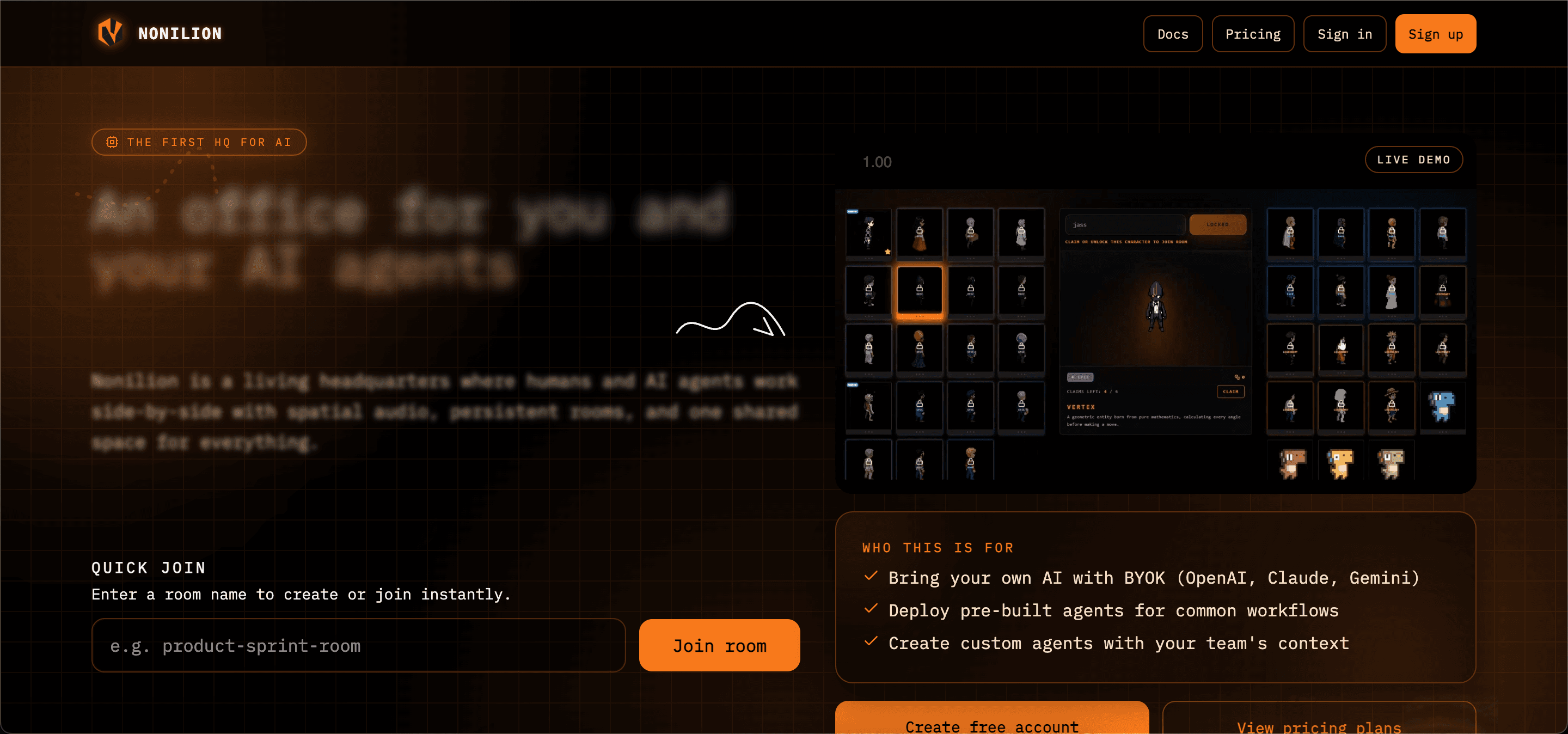
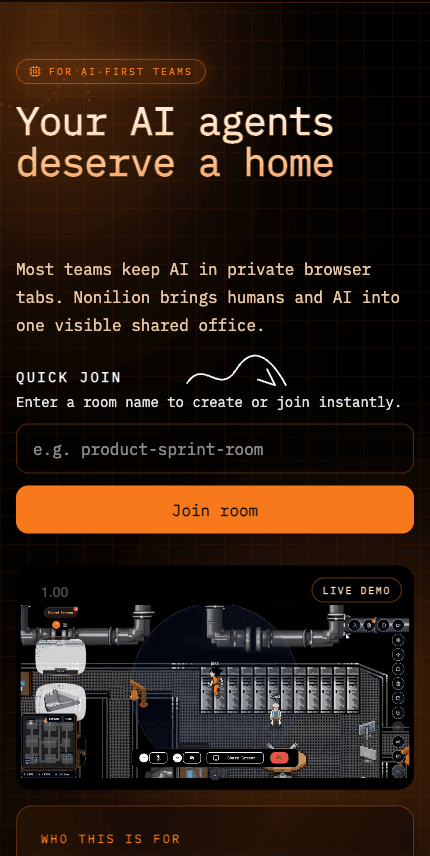
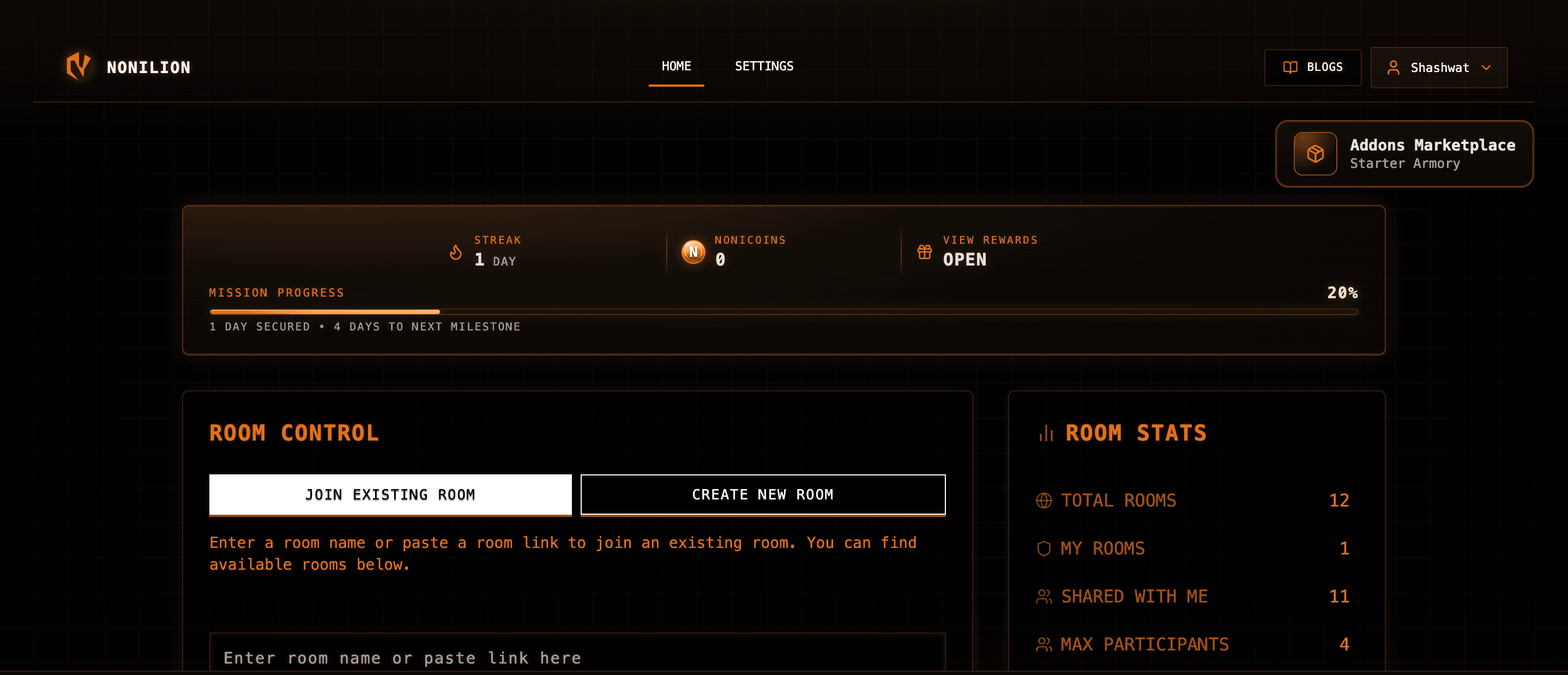
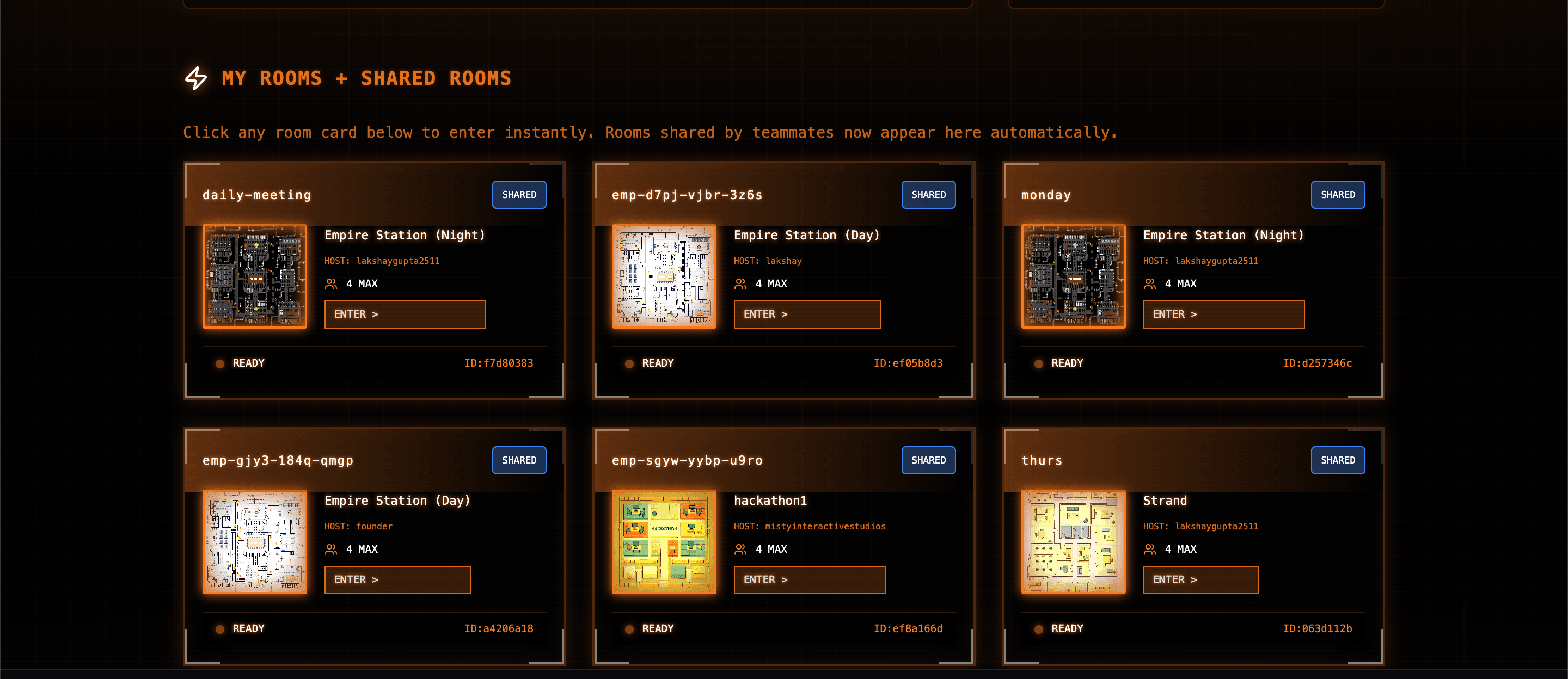
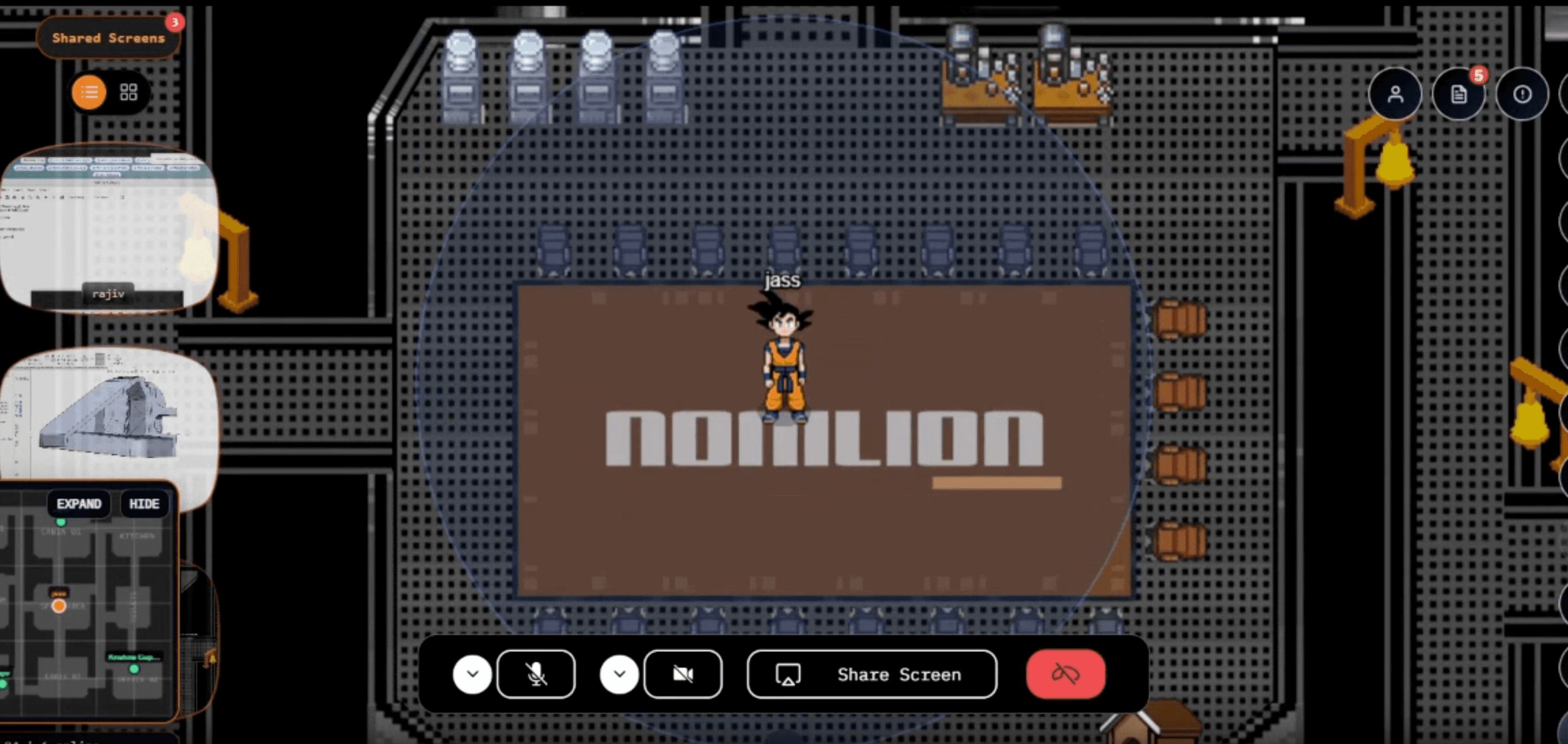
Nonilion.com needed a spatial office where remote teams move avatars through rooms, hear each other based on proximity, and escalate to full video without leaving one session.
Next.js spatial UI with Node/Express orchestrating LiveKit for WebRTC, Redis for avatar and room state, PostgreSQL for orgs and users, and query paths tightened until p95 API latency dropped about 40%.
Proximity audio has to feel natural at scale: fan-in from 100+ concurrent WebRTC sessions, Redis-hot spatial state, and no single point that takes the fleet offline.
Next.js rooms, avatar movement, and client-side proximity hints feeding audio policies.
Negotiation, track management, and proximity-based audio level adjustments by avatar distance.
Avatar positions, room occupancy, and session indexes for sub-millisecond reads under fan-in.
Companies, users, roles, and room persistence with optimised queries and caching boundaries.
Health checks, structured logging, and load tests on concurrent room joins.
Sustained across the LiveKit-backed fleet and API tier — on-call focused on Redis hot paths and Express query plans so spatial offices stayed reachable for distributed teams during peak US/EU overlap.
Sustained across the LiveKit-backed fleet and API tier — on-call focused on Redis hot paths and Express query plans so spatial offices stayed reachable for distributed teams during peak US/EU overlap.
WebRTC sessions with proximity audio fan-in: avatars near each other hear full fidelity while distant conversations attenuate, matching the product promise of a walkable virtual office.
Across 100+ companies on Nonilion.com — growth validated that the spatial metaphor resonated beyond a single pilot tenant and that infra could absorb organic room creation.
p95 API latency improved via Redis caching of spatial aggregates and PostgreSQL query tightening on org and membership paths that previously scanned over-large joins.
Managed SFU sped time-to-market for proximity audio while Express kept bespoke business rules.
Redis as the hot spatial cache avoided hammering Postgres on every avatar tick.
SSR/CSR hybrid let marketing and app share auth without splitting repos.
40% latency win came from killing accidental N+1 API patterns once Redis showed the real hot keys.
We take on a small number of projects at a time. If the problem is hard, we're interested.